What DMCA actually is, and what its scope is
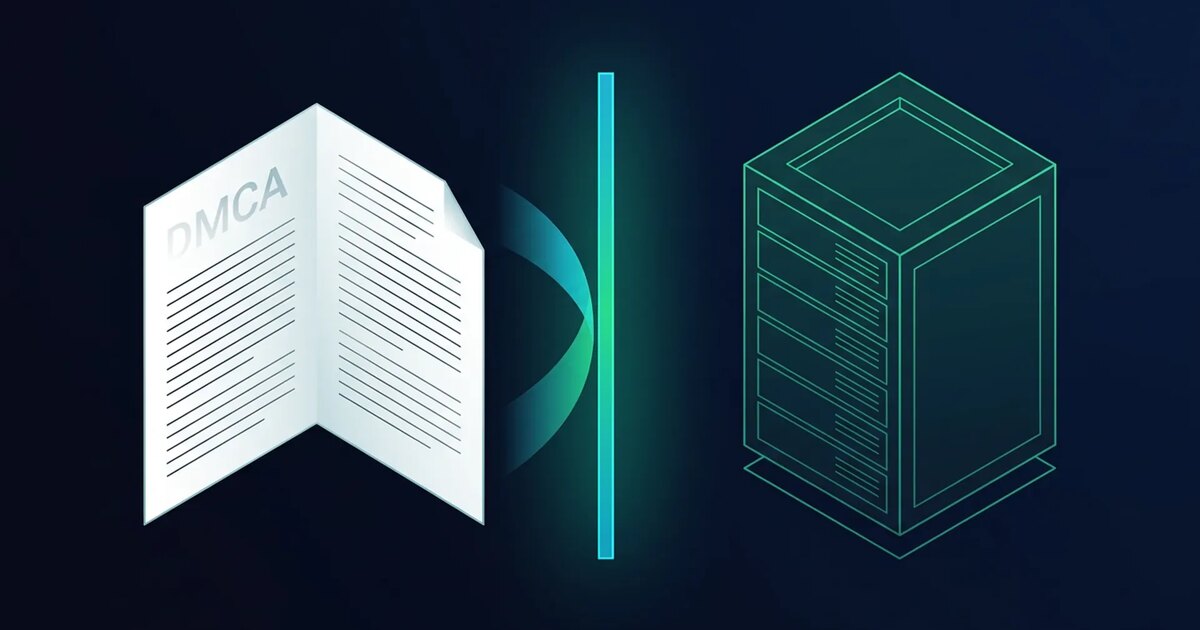
The Digital Millennium Copyright Act of 1998, codified at 17 U.S.C. § 512, is United States federal copyright statute. Section 512 establishes a notice-and-takedown procedure that gives US-based service providers a safe harbour from copyright liability if they remove allegedly infringing content within a reasonable time of receiving a properly formatted notice. The bargain is: you remove the content on a notice (no court order needed) and you keep your safe harbour.
DMCA is United States law and binds providers that fall under United States jurisdiction. It has no extraterritorial force — a hosting company incorporated and operating outside the US is neither protected by § 512 nor obligated by it. "Ignoring DMCA" is therefore not lawless; it's a description of the default position of every non-US host. The interesting question is what each foreign jurisdiction substitutes in place of § 512.
Why non-US hosts can decline DMCA notices
When a rights-holder sends a DMCA notice to a non-US host, the notice has no statutory teeth in the host's home jurisdiction. The host can read it, file it, and reply that DMCA does not apply. The rights-holder's options at that point are: pursue a court order under the host's local copyright statute (slow, expensive), pursue the customer directly in any jurisdiction where the customer is reachable, or pursue adjacent infrastructure (domain registrar, DNS provider, CDN, payment processor).
The local copyright statute matters because every Berne signatory protects copyrighted works against unauthorised reproduction. But Berne harmonises substantive rights, not procedure. The DMCA is a US procedural device; the EU has its own (the eCommerce Directive 2000/31/EC, Article 14); other jurisdictions have their own. The thresholds, response times and procedural requirements vary enormously.
The two practical questions for any customer are: (1) what is the procedural threshold for compelling the host to act in this jurisdiction? and (2) how willing is the host's local legal system to entertain a foreign rights-holder's claim? The matrix below answers both for nine common offshore-hosting jurisdictions.
Matriz por jurisdicción
| Jurisdiction | DMCA force? | Local equivalent | Threshold to compel | Practical posture |
|---|---|---|---|---|
| Iceland | None | IMMI framework + EEA-aligned IP law | Domestic court order | Strong free-press constitution; foreign takedowns rarely escalate. |
| Switzerland | None | Federal Copyright Act (URG) | Swiss court order required | High procedural bar; foreign rights-holders rarely pursue. |
| Romania | None | Law 8/1996 + EU eCommerce Directive | Domesticated EU NTD or court order | Constitutional Court has twice struck down EU data retention; tolerant in practice. |
| Netherlands | None | EU eCommerce Directive Art 14 (NTD code) | Notice-and-takedown via local counsel | EU NTD operates faster than non-EU equivalents; threshold lower than CH/IS. |
| Saint Kitts & Nevis | None | Copyright Act (Cap 18.08) | Nevisian court order | Small jurisdiction with limited rights-holder enforcement infrastructure. |
| Cyprus | None | EU eCommerce Directive + Law 128(I)/2002 | Notice-and-takedown via local counsel | EU member but historically slow on rights-holder enforcement. |
| Bulgaria | None | EU eCommerce Directive + LCASR | Notice-and-takedown via local counsel | EU member; comparable threshold to Romania. |
| Russia | None | Civil Code Pt IV (Copyright) | Domestic court order | Caveat: payment rails and peering relationships severely restricted; no longer a practical offshore option for Western customers. |
| Cayman Islands | None | Copyright (Overseas Territories) Order 1989 | Caymanian court order | Limited datacenter footprint but legally pristine; expensive to host. |
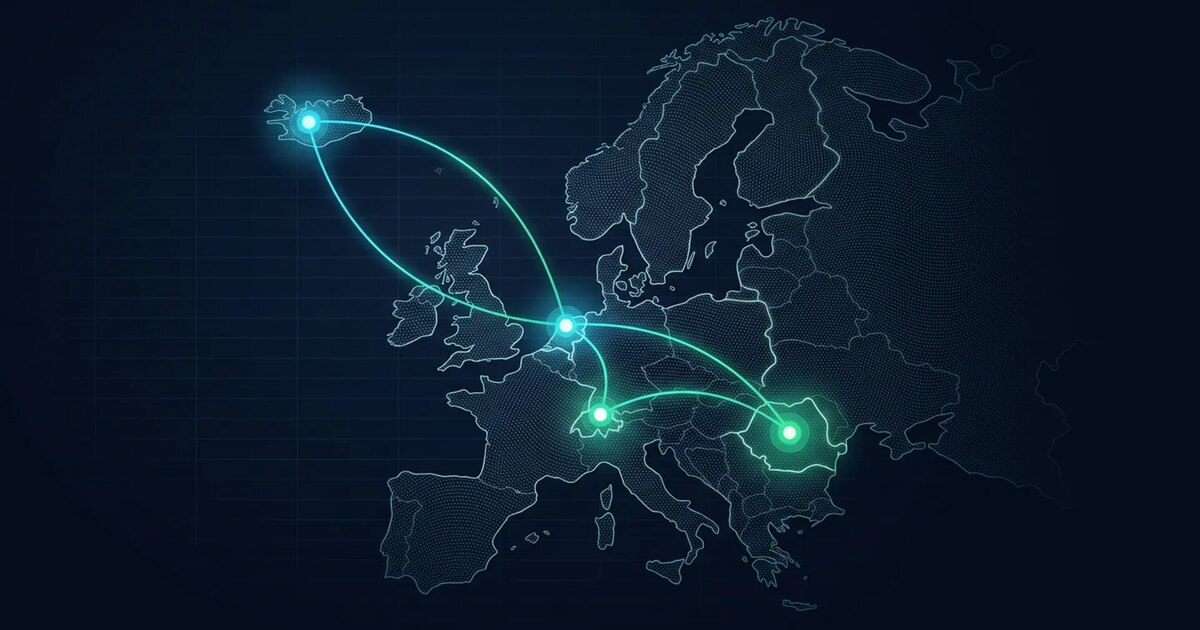
Of these nine, the four we operate in directly are Iceland, Switzerland, Romania and the Netherlands. The other five are listed for completeness because customers regularly ask about them when comparing offshore hosting providers.
EU eCommerce Directive and notice-and-action regimes
Five of the nine jurisdictions above (Romania, Netherlands, Cyprus, Bulgaria, plus Iceland through the EEA agreement) operate under the EU eCommerce Directive 2000/31/EC. Article 14 of that directive establishes a notice-and-action regime that is procedurally similar to DMCA in structure but materially higher in threshold. Where DMCA accepts a templated email notice, the EU regime requires an identifiable rights-holder, a specific URL, and a documented basis for the claim — and the host's obligation only kicks in once they have actual knowledge of unlawful activity.
In practice, EU NTD is faster than pursuing a court order in a non-EU jurisdiction (Switzerland, Iceland, Saint Kitts) but slower than DMCA in the US. The threshold variability between EU member states is significant: the Netherlands processes NTD claims relatively quickly through a system of voluntary compliance; Romania is slower and more procedurally exacting; Cyprus and Bulgaria are slower still. Customers who care about NTD friction should weight Romania, Cyprus and Bulgaria above the Netherlands.
Islandia y el marco IMMI
Iceland's Modern Media Initiative (IMMI), passed in 2010, is a parliamentary resolution that committed the Icelandic government to the strongest free-press and intermediary-liability framework in the developed world. The substantive legislation that followed includes whistleblower protections, journalistic source confidentiality, and a high bar for compelled removal of intermediary-hosted content. The full text of the IMMI resolution is available on the IMMI Wikipedia entry and on immi.is.
In practice, Iceland's posture means foreign rights-holders pursuing takedowns face a wall: there is no notice-and-takedown procedure; everything goes through Icelandic courts; Icelandic courts apply Icelandic law including the IMMI-aligned protections. We have not seen a successful foreign takedown of a customer in Iceland in our operating history — the procedural friction is functionally prohibitive for most rights-holders.
Switzerland and the Federal Copyright Act
Switzerland is outside the EU and outside the EEA, which means EU directives don't apply directly. The relevant statute is the Federal Copyright Act (URG), revised in 2020. The host's obligation arises only on a Swiss court order; informal takedown notices have no statutory force.
Swiss courts apply Swiss law and are notoriously procedural — pursuing an order is expensive (typically CHF 8,000–25,000 in legal fees minimum) and slow (six to eighteen months). For commercial-scale infringement at industrial volume the calculation may still favour rights-holders; for individual blog posts, forum threads, or Tor exit relays it never does.
Romania — the underrated EU pick
Romania has the unusual distinction of being an EU member whose Constitutional Court has twice (2009 and 2014) struck down EU data retention obligations as incompatible with the Romanian constitution. The 2014 ruling in particular, in case 440/2014, established that mandatory retention of communications metadata violates Romanian constitutional rights to private life and personal data protection. The court's reasoning is documented in detail at the Constitutional Court's published case archive and analysed in the IMMI movement's comparative jurisdictional notes; the parallel academic literature on intermediary liability documents how rare such constitutional rulings are.
The practical consequence for hosting customers is that Romania has neither the data-retention floor of more compliance-oriented EU members (Germany, France, the Netherlands) nor the procedural friction of non-EU jurisdictions (Switzerland, Iceland). Notice-and-takedown applies but is slow; data retention is voluntary rather than mandatory; electricity is the cheapest in the EU. For customers who want EU presence with minimal compliance overhead, Romania consistently scores well.
Saint Kitts and Nevis
Saint Kitts and Nevis is a small Caribbean federation with a long history as an offshore corporate jurisdiction. The Copyright Act (Cap 18.08) protects copyrighted works on Berne-aligned principles, but rights-holder enforcement infrastructure on the islands is limited — there are few specialist IP lawyers, and pursuing a court order requires either local counsel (expensive) or instructing through a Caribbean-region firm in Barbados or Trinidad. The procedural friction for a foreign rights-holder is therefore substantial.
We incorporate Cryptoservers Ltd. in Saint Kitts and Nevis (registration C 59284-2024) for exactly this reason: the corporate parent is in a jurisdiction where rights-holder enforcement is procedurally expensive, even though the operational infrastructure is in Iceland, Switzerland, Romania and the Netherlands. Customers benefit from the corporate-layer protection without paying the operational cost of hosting in a distant Caribbean datacenter.
Russia — caveat emptor in 2026
Russia historically had a reputation as a DMCA-immune jurisdiction with cheap hosting and lax enforcement. In 2026, this reputation is substantially out of date. Western payment rails (Visa, Mastercard, SWIFT correspondent banking) are largely closed to Russian hosting companies; international peering has been severely degraded by sanctions and by Russian regulatory requirements; data localisation laws make hosting non-Russian customer data legally fraught for the host itself.
Russia is listed here for completeness, but we do not recommend it as a practical offshore-hosting choice for Western customers in 2026. The legal posture toward DMCA is unchanged; the operational posture toward connecting with Western users is no longer viable.
Cayman Islands
The Cayman Islands operate under the Copyright (Overseas Territories) Order 1989, which mirrors UK copyright law but with the Caymanian court system as the enforcement venue. Rights-holder pursuit through Caymanian courts is rare and expensive; the jurisdiction is legally pristine for offshore copyright purposes.
Datacenter footprint in Cayman is limited and expensive — power and connectivity costs are substantially higher than European alternatives, and there is no local Tier-1 peering. Cayman is the right pick for highly-sensitive low-bandwidth workloads where the legal floor matters more than network reach; for most customers, Iceland or Switzerland offer comparable legal posture with much better operational economics.
Conclusión
If your goal is "DMCA-ignored" in 2026, the practical jurisdictions in order of accessibility are: Iceland, Switzerland, Romania, Netherlands, Saint Kitts and Nevis, Cyprus, Bulgaria, and Cayman. Each substitutes its own procedural framework for the US notice-and-takedown system; some are higher-friction (Switzerland, Iceland, Saint Kitts), some are lower-friction (Netherlands, Cyprus, Bulgaria). The right pick depends on your specific risk model — for sustained anti-takedown protection, Switzerland or Iceland; for EU presence with low compliance overhead, Romania; for the broadest pragmatic offshore option, the Netherlands.
What none of these jurisdictions will do is host content that is unlawful in their own jurisdiction (CSAM, credible threats, sanctions violations). The boundary is clear: "DMCA-ignored" describes a posture toward US-style copyright takedown notices, not a posture toward criminal law generally.