What "offshore hosting" actually means
"Offshore" is a term of art borrowed from finance — it originally described banking operations conducted outside the depositor's home jurisdiction. In hosting it has the same shape: a server physically located, and a hosting company legally incorporated, outside the customer's country of residence. The label says nothing about the customer's intent, the legality of the workload, or the jurisdiction's tax posture. It is a geographic-and-corporate description, not a legal one.
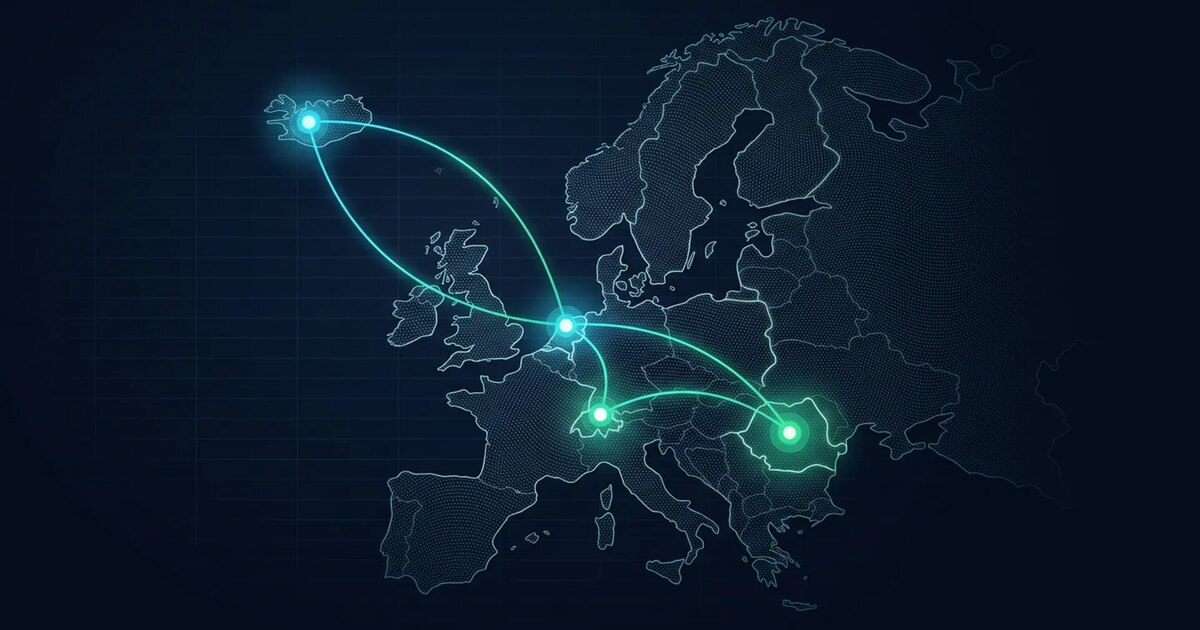
Iceland, Switzerland, the Netherlands, Romania, the Federation of Saint Kitts and Nevis, the Cayman Islands, the Seychelles and Singapore are all common offshore hosting jurisdictions. Each has its own statutory framework, its own intermediary-liability regime, and its own threshold for compelling customer information. None of them is lawless; the marketing phrase "offshore" sometimes implies otherwise but the reality is that every reputable offshore host operates under a fully developed body of law — just not the law of the customer's country.
Two legality questions to keep separate
The first question — is it legal for an offshore company to operate a hosting service that customers from any country can buy? — has the same answer in every developed legal system: yes, provided the company complies with the law of its home jurisdiction. There is no international treaty that forbids transnational hosting services, and the WTO General Agreement on Trade in Services (GATS) explicitly lists telecommunications and computer services as covered cross-border services.
The second question — is it legal for me, a customer in country X, to buy hosting from a company in country Y and run a website on it? — also generally has the answer yes, but with two exceptions worth naming up front. First, if your country has specific licensing requirements for the type of business you operate (regulated financial services, prescription pharmaceuticals, gambling), those licensing rules attach to you wherever your servers are. Second, if your country has export-control or sanctions regimes that prohibit you from doing business with the host's country (US OFAC sanctions on certain jurisdictions, for example), those bind you regardless of where the servers are.
Outside those two exception classes, picking a foreign hosting provider is the same kind of choice as picking a foreign bank, a foreign email provider, or a foreign mailing address — legal and routine. The vast majority of offshore-hosting customers are journalists, privacy-tool maintainers, small e-commerce operators, hobbyist sysadmins, Tor relay operators and self-hosters who simply want their infrastructure outside their home jurisdiction's reach.
Why offshore hosting is generally legal
Hosting is a content-neutral telecommunications service. Both the European eCommerce Directive 2000/31/EC, Article 14 and the US 47 U.S.C. § 230 codify the principle that a hosting intermediary is not the publisher of content uploaded by its users, and therefore is not liable for that content unless it has actual knowledge of illegality and fails to act. Article 14 in particular requires hosts to remove content only after they obtain actual knowledge of unlawful activity — not preemptively, not on suspicion, and not on the basis of an unverified takedown notice.
Most jurisdictions outside the US and EU have analogous safe-harbour provisions. The general international principle of intermediary liability — extensively documented in academic literature and in OECD reports — is that conduit-only providers are not responsible for the content their users transmit, much as the postal service is not responsible for the contents of letters. Offshore hosts operate within this framework; they are not the wild west of the internet, they are simply hosts under a different statute.
There is no "international hosting licence" that an offshore operator must obtain to serve foreign customers. Cross-border B2B services are explicitly contemplated under the GATS. A customer in Germany buying VPS hosting from a Saint Kitts company is doing the same kind of cross-border commerce as a customer in Germany buying a book from Amazon's Luxembourg subsidiary. The transaction itself is unremarkable.
The exceptions — content that is illegal everywhere
Child sexual abuse material (CSAM) is illegal in every jurisdiction we operate in and in every reputable offshore hosting jurisdiction more generally. International cooperation on CSAM is among the most coordinated areas of cross-border law enforcement; offshore hosts that fail to act on credible CSAM reports lose their banking, peering, and operating licences within months. We report CSAM to the National Center for Missing and Exploited Children (NCMEC) and to the relevant national authority regardless of customer jurisdiction.
Credible threats of violence, terrorism content, and identity-theft materials are similarly treated as criminal regardless of host jurisdiction. The intermediary safe-harbour does not protect a host that has actual knowledge of these and continues to host them.
Intent matters for the user, not the host. An offshore VPS does not insulate a customer from criminal liability under their own country's law. A US-resident customer running a fraud scheme on a Swiss VPS is still committing US fraud; the foreign hosting changes the procedural friction of investigation but not the substantive criminality. Customers who imagine that offshore hosting equals lawlessness are misreading the architecture.
How jurisdiction works for content uploaded by users
When a customer uploads content to a server, multiple jurisdictions may have an interest: the host's jurisdiction (where the server physically sits and the corporate parent operates), the customer's jurisdiction (where the customer resides and may face their own national law), and any jurisdiction where the content is consumed by users (which can in principle assert jurisdiction over content targeted at its residents).
In practice, the host's jurisdiction is the binding one. A French rights-holder cannot compel a Saint Kitts host to remove content via French law; they would need to either obtain a Nevisian court order (which Nevisian courts apply Nevisian law to issue) or pursue the customer directly in their own jurisdiction. The host's home court is the only forum that can compel the host to act.
The customer's jurisdiction is binding on the customer. If you upload content from Germany that is illegal under German law, German authorities can prosecute you under German law regardless of where the server lives. They cannot directly compel the foreign host to act, but they can pursue you. This is the core distinction: offshore hosting changes who can pressure the infrastructure, not who can pressure you personally.
Practical legal risk for typical users
For a journalist publishing investigative reporting, a privacy-tool maintainer running a Tor relay or VPN exit, a small e-commerce operator selling lawful goods to international customers, a developer running a personal blog or self-hosted Git server, or a hobbyist running a Matrix homeserver: there is no meaningful legal risk associated with picking an offshore host over a domestic one. The legal posture is the same; the geography of the infrastructure is just an operational choice.
For a customer running activity that is illegal under their own country's law (regardless of host): the offshore host does not extend legal cover. The procedural friction of a foreign jurisdiction may delay enforcement, but it does not eliminate it, and any customer who treats offshore hosting as a get-out-of-jail-free card is misunderstanding both the legal framework and the operational reality. Domestic prosecutors have many tools that don't require host cooperation: chain-of-custody analysis on payments, OSINT correlation of registration data, traffic analysis on backbone networks, and direct interview of the customer.
The short version is: offshore hosting is a tool for legal-but-targeted speech and privacy, not a tool for criminal activity. Privacy Guides and similar communities consistently frame it that way, and that's the framing that matches the actual legal reality.
How to evaluate your own legal risk
Three questions are worth answering before signing up for any offshore host. First: is the activity I plan to host legal in my own country? If yes, offshore hosting is a privacy-and-resilience choice, not a legal one. If no, offshore hosting changes the procedure of any investigation but not the underlying criminality.
Second: does my activity require a specific licence in my country (financial services, gambling, regulated pharmaceuticals, prescription medical advice)? Licensing attaches to the activity, not the server. If the answer is yes, comply with the licensing — offshore is fine, but unlicensed is not.
Third: am I in a sanctioned jurisdiction or am I dealing with a sanctioned entity? Sanctions regimes (US OFAC, EU, UK) are usually enforced at the payment-rail level rather than the host level, but they do bind individuals as well as institutions. If you're unsure, this is the question that warrants real legal advice, not a guide.
If those three answers are reassuring, the legal posture of offshore hosting is straightforward: a routine, legal, cross-border B2B service. The marketing language can sometimes make it sound exotic; the reality is that you're buying server time from a foreign company under a contract governed by their law, and that is something tens of millions of people do every day without legal incident.